Commercial STR Guide
Beyond the Checklist: The Professional Guide to Commercial STR Turnover & Operations
Last updated:
Elevate your Georgia Airbnb/STR business from a side-hustle to a commercial-grade operation with 5-star consistency, operational efficiency, and scalable systems.
Need a reliable operations partner? We offer Commercial-Grade Airbnb Cleaning services across Georgia.
The "Commercial-Grade" Difference: From Host to Operator
For a professional short-term rental operator, a "turnover" is more than just cleaning. It's a precise, system-driven process that determines your profitability. The difference between an amateur host and a commercial-grade operator lies in the ability to execute this process flawlessly at scale. A simple checklist isn't enough; you need an operational system.
Consistency at Scale
Ensuring every property, from a downtown studio to a mountain cabin, delivers the *exact same* 5-star level of cleanliness and staging, every single time.
Speed & Efficiency
Minimizing property downtime. A commercial system enables same-day turnovers, maximizing your occupancy and revenue per available night.
Total Operations Management
Integrating cleaning with inventory management, damage reporting, and maintenance coordination. Your team becomes your "eyes and ears" on the ground.
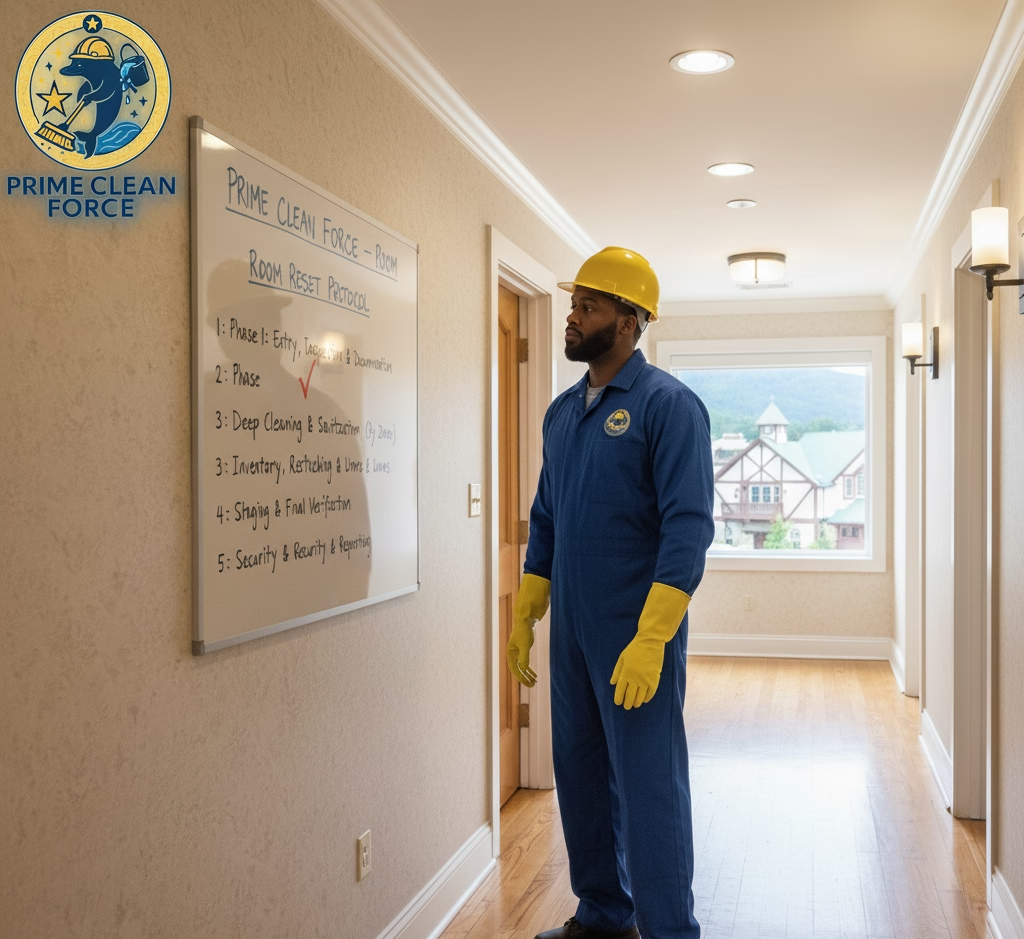
The 5-Phase Professional Turnover Process
This is the operational workflow used by professional STR management companies. Each phase is critical for ensuring a perfect guest experience and protecting your asset.
Phase 1: Entry, Inspection & Documentation
This phase is about setting up for success and documenting the property's initial state.
- Safe Entry: Verify the key code or lockbox, ensuring the previous guest has departed. Never enter if a guest is still present.
- Initial Walkthrough: Conduct a quick pass-through of the entire unit. Open all windows to ventilate (if weather permits).
- Damage/Left-Item Documentation: This is crucial. Photograph any new damage, broken items, or signs of rule-breaking (e.g., smoking, unauthorized parties). Document any items left behind by the guest.
- Gather & Strip: Collect all trash from every room. Strip all beds and gather all used towels and bathmats, creating a single pile for laundry processing.
Phase 2: Deep Cleaning & Sanitization (By Zone)
Work methodically from top to bottom, back to front, to avoid re-cleaning. Always end with sanitizing high-touch surfaces.
Kitchen
- Appliances: Clean microwave inside/out. Wipe refrigerator exterior (handles!) and check inside for leftovers, wipe shelves. Clean stovetop and oven door. Run/empty the dishwasher.
- Surfaces: Clean and sanitize countertops, sink, faucet, and backsplash.
- Cabinets: Spot-clean cabinet fronts and handles.
- Floors: Sweep/vacuum, then mop.
Bedrooms
- Furniture: Dust all furniture (nightstands, dressers, headboards). Check drawers for dust or forgotten items.
- Linens: Make the bed with fresh, clean linens (covered in Phase 3).
- Floors: Vacuum the entire floor, paying special attention to under the bed.
Bathrooms
- Shower & Tub: Scrub shower walls, tub, and fixtures to remove all soap scum. Clean shower door and track.
- Toilet: Clean and disinfect the toilet from top to bottom, including the base and behind it.
- Vanity & Sink: Clean countertop, sink, and faucet. Polish the mirror.
- Floors: Sweep and mop with a disinfectant cleaner.
Living / Common Areas
- Dusting: Dust all surfaces, tables, electronics, light fixtures, and ceiling fans.
- Upholstery: Vacuum sofas and chairs, checking between cushions. Straighten pillows and fold throws.
- High-Touch Sanitization: As the final step, disinfect all high-touch points: light switches, door handles, TV remotes, and thermostat controls.
Phase 3: Inventory, Restocking & Linens
A 5-star guest experience is defined by consistency. Your property should have hotel-like "par levels" for all consumables.
Restock Matrix
Use this as a baseline. Adjust quantities based on your property size and max guest count.
| Item | Location | Standard Par Level |
|---|---|---|
| Toilet Paper Rolls | Bathroom | 2-3 per bathroom |
| Paper Towel Roll | Kitchen | 1 new roll |
| Hand Soap | Each Sink | Full dispenser |
| Shampoo / Conditioner / Body Wash | Shower | Full or new small bottles |
| Dish Soap & Sponge | Kitchen | Full dispenser, new sponge |
| Coffee & Tea Supplies | Kitchen | Assortment (e.g., 6 K-cups, 4 tea bags) |
| Trash Bags | Under Sink | 3-4 extra bags |
Linen Procedure
- Professional Bed Making: Use clean, high-quality, and unstained linens. Make beds with "hotel corners" for a professional look.
- Towel Staging: Neatly fold or roll towels and stage them in the bathroom (e.g., on a rack, on the bed). A standard set is 2 bath towels, 1 hand towel, and 1 washcloth per guest.
Phase 4: Staging & Final Verification
This is the "hotel touch" phase that wows guests upon entry.
- "Guest-Eye" Walkthrough: Do a final walkthrough from the perspective of an arriving guest. Start at the front door.
- Atmosphere: Set the thermostat to a comfortable temperature (e.g., 72°F).
- Staging: Arrange pillows on sofas and beds. Straighten curtains and blinds to a uniform level.
- Final Touches: Place any welcome guides or notes. Ensure all lights are off (unless specific ones are left on for arrival).
- Photo Proof: Take timestamped "after" photos of the property. This is your proof of the property's condition before the next check-in, invaluable for disputes. Key shots: each made bed, clean stovetop, living room, and any special amenities.
Phase 5: Security & Reporting
The job isn't done until the property is secure and the owner is informed.
- Secure the Property: Lock all windows and doors.
- Code Reset: If using smart locks, ensure the previous guest's code is deactivated and the next guest's code is scheduled.
- Submit Operations Report: Send your report to the property manager or owner. This report MUST include:
- Confirmation of turnover completion.
- The "before" photos of damage (from Phase 1).
- Any maintenance issues found (e.g., "Shower is dripping," "TV remote batteries are dead").
- Notification of low inventory on consumables (e.g., "Running low on coffee pods").
Georgia's Premier STR Markets: An Operator's View
Professional operations are essential to compete in Georgia's diverse and high-demand markets. Here’s a look at the top zones, their drivers, and key high-visitation zip codes for operators.
Metro Atlanta (The Urban Hub)
Drivers: Hartsfield-Jackson (the world's busiest airport), corporate HQs, conventions (GICC, GWCC), film industry, sports (Mercedes-Benz Stadium), and the BeltLine.
30309(Midtown): Piedmont Park, High Museum, business travelers.30303/30313(Downtown): Conventions, Aquarium, World of Coke, stadium.30312/30307(Old Fourth Ward / Inman Park): BeltLine access, Krog Street Market, Ponce City Market.30305(Buckhead): Luxury shopping (Phipps, Lenox), dining.30337(College Park): Airport proximity, GICC.
Savannah (The Historic Gem)
Drivers: Historic charm, River Street, culinary scene, Forsyth Park, and major events (St. Patrick's Day). Strict regulations require operational perfection.
31401(Historic District): The core of tourism, walkability to squares, River Street.31328(Tybee Island): The primary beach destination for Savannah visitors.
North Georgia Mountains (The Cabin Escape)
Drivers: Wineries, hiking, apple orchards, and seasonal tourism (Oktoberfest, fall foliage). Operations here involve managing larger properties and more complex cleaning.
- Blue Ridge (
30513): Upscale cabins, downtown shopping, scenic railway. - Helen (
30545): "Alpine" themed town, tubing, Oktoberfest. - Dahlonega (
30533): Wineries, Gold Rush history, wedding venues.
Key Niche Markets
Drivers: These markets are driven by specific, high-demand events and institutions.
- Athens (
30601/30605): University of Georgia (game days, graduation), music scene. - Augusta (
30901): The Masters Tournament (drives the highest nightly rates in the state), medical district. - Columbus (
31901): Fort Moore (graduations, family visits), whitewater rafting.
Why Partner with a Pro? The ROI of a Commercial Cleaning System
For a multi-property operator, your time is your most valuable asset. Executing this 5-phase process perfectly, every 48 hours, across a portfolio of properties is a logistical challenge. Viewing your turnover partner as a simple "cleaner" is a strategic mistake; they are your operations partner.
Stop Cleaning. Start Operating.
Partnering with a commercial-grade service isn't an expense; it's an investment in scalability and guest experience. Here's the return:
- Guaranteed 5-Star Cleanliness: Protect your reviews, your most valuable asset.
- Maximize Uptime: We enable rapid, same-day turnovers to maximize your booking revenue.
- Total Reliability: Our systems and teams mean you never worry about a cleaner no-show again.
- Full Integration: We become your eyes and ears, handling damage, maintenance, and inventory reporting.
- Scalability: Add new properties to your portfolio without adding operational headaches.
Prime Clean Force provides hotel-quality, system-driven turnover services for commercial STR operators across Georgia. We handle the operations so you can focus on growth.
Get Your Free Operations Estimate